Bookmark

Press ctrl+D to bookmark.We are coming with updates everyday.

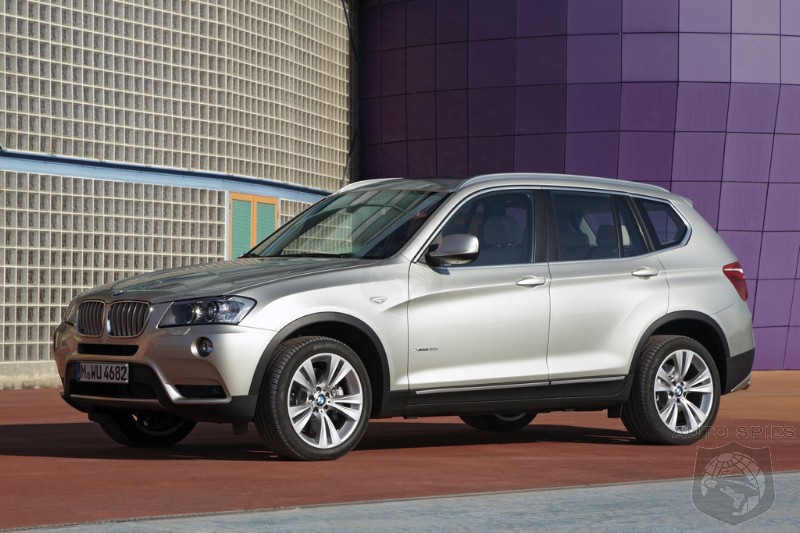
2011 BMW X3


Even though BMW has yet to release full technical data for the 2011 X3, it is known that the new SUV is expected to grow in size while shrinking in weight. It is expected that the X3 will become roughly 3.3 inches longer overall, with an added .6 inches to the wheelbase, along with an extra 1.1 inches of width and 1.4 inches of height. Depending on the model, weight is expected to drop by roughly 50 pounds.

Thanks to the larger outer shell, passengers are also expected to gain .8 inches of legroom in the back row, along with another 2.8 cubic feet of storage space in the rear hatch area.

The current X3 has been criticized for a sub-par interior, but it looks as though BMW has addressed that issue for the 2011 model year. While we can’t comment on the feel of the interior, the design is classic BMW and looks to be comprised of high-quality materials.

The exterior of the 2011 model is still recognizable as an X3, albeit with a decidedly more modern look. Nothing radical here, but the X3 now shares the same basic design language as seen on BMW’s new 5- and 7-Series models.

The 2011 X3 will launch with in two trim levels — X3 xDrive20d and X3 xDrive35i. The xDrive20d model — which will likely be reserved for the European market — features a 184 horsepower, 280 lb-ft of torque version of BMW’s 2.0-liter four-cylinder diesel. While not the powerhouse of the X3 lineup, the four-cylinder diesel is quite peppy, accelerating the X3 from 0-62 in 8.5 seconds, carrying on to a top speed of 130mph.

The X3 xDrive35i uses BMW’s familiar turbocharged 3.0-liter inline-six. Power is rated at 306 horsepower and 294 lb-ft of torque, transforming the X3 into a serious performer. The sprint from 0-62 takes just 5.7 seconds, with the xDrive35i topping out at 152mph.

Both powerplants are backed by BMW’s eight-speed automatic transmission, with the six-cylinder version of the X3 featuring automatic stop-start technology.

Look for the 2011 BMW X3 to bow later this year at the Paris Motor Show, followed by a European and then North American roll out.


The new 2011 BMW X3 has been officially revealed and this little brother of the popular BMW X5 finally moves away from the previous hideous styling.

The top of the range 2011 BMW X3 xDrive35i price starts at 51,850 EUR or 66,259 USD.

X3 xDrive35i is powered by the 3.0-liter straight 6-cylinder TwinPower Turbo direct injection engine with VALVETRONIC. The 2011 BMW X3 xDrive35i outputs 225 kW/306 bhp at 5,800 rpm and 400 Nm of torque at 1,300 rpm. This high hp output makes the 2011 BMW X3 xDrive35i accelerate from 0 to 100 km/h in 5.7 seconds and up to a maximum top speed of 245 km/h.

xDrive20d version of X3 will cost EUR46,900 ($60,140).

The BMW X3 is set to make its public debut at the Paris Auto show in September.

BMW X5-Overview


The BMW X5 was this German automaker's first entry into the luxury SUV segment. Realizing that most SUV buyers rarely, if ever, venture off-road, BMW designed the X5 for on-road performance and handling. Short overhangs, a compact size (the original was 4.5 inches shorter than the 5 Series sedan of the same time period) and a car-based chassis combined to give the X5 its low stance and superb on-road performance. The X5, produced at BMW's first American plant in Spartanburg, South Carolina, quickly became a huge hit for BMW in the U.S.

The first-generation BMW X5 only sat five people, however, and this is something that the company addressed with the current model. Redesigned for the 2007 model year, the second-generation X5 looks very similar to its predecessor, but is larger than before. It now features an optional third-row seat and room for seven, along with more cargo capacity. Despite this growth, the X5 is still very entertaining to drive as luxury SUVs go. If this appeals to you, the BMW X5 is a fine choice, new or used.

Current BMW X5

The BMW X5 comes in three variants: the X5 xDrive 30i, the X5 xDrive48i and the turbodiesel xDrive35d. As such, there are three engine choices: A 260-horsepower inline six-cylinder engine is standard on the X5 xDrive35i and a 350-hp 4.8-liter V8 is included on the X5 xDrive48i. The X5 xDrive35d features a turbocharged diesel engine that produces 265 hp and a massive 425 pound-feet of torque. The term "xDrive" refers to the standard all-wheel-drive system that enhances the X5's all-weather capability.

The X5 offers a fair amount of utility thanks to its all-wheel drive and optional third-row seat. It's also quite sporty, and injects an ample amount of Bavarian handling chutzpah into the ridin'-high body of a family-friendly SUV. Although several luxury automakers have taken aim at the X5's sporting formula, this BMW remains very attractive for those who want the "S" in SUV to actually mean something.

Our editors have found the interior furnishings quite handsome in BMW's biggest and newest SUV, with comfortable seating for the driver and rear passengers. The materials are of excellent quality and the craftsmanship is top-notch. Even the once-hated iDrive system has been dramatically improved to be one of the better electronics interfaces on the market. Only heavy steering at low speeds and a hefty price are sour notes, along with the small size of the third-row seat, which makes it impractical for use by adults.

Used BMW X5 Models

The present-generation BMW X5 was introduced for the 2007 model year. It is bigger, more luxurious and smoother riding than its predecessor. Prior to '09, the models were known as 3.0si and 4.8i, and the turbodiesel xDrive35d was not yet available. Prior to 2010, iDrive was an older version, and thus far less intuitive to use than the current version.

The original, first-generation BMW X5 debuted for the 2000 model year. It was initially offered with one engine only: a 4.4-liter V8 engine. A 3.0-liter inline six-cylinder engine debuted the following year. Though the six-cylinder offered superior fuel economy and adequate overall performance, it was often criticized for its lack of off-the-line grunt. The 4.4i reached 60 mph in fewer than 8 seconds. One note to buyers looking at a first-year BMW X5: All X5 models manufactured after June 2000 (starting with the '01 model year) benefited from important structural changes that improved occupant protection in frontal crashes.

In 2002, the high-performance BMW X5 4.6is debuted, boasting a 4.6-liter V8 making 340 hp and 350 pound-feet of torque. The midlevel X5 4.4i saw an 8 horsepower increase to 290 for the year. Towing aficionados welcomed a new version of the stability control system that aided trailer towing, and BMW finally made a CD player standard in its luxury SUV.

In 2004, the X5 received its most extensive refreshening. A new front fascia received BMW's signature corona ringed headlamps, optional adaptive headlights and new foglamps. The year also marked the introduction of BMW's new all-wheel-drive system, xDrive. Compared to the previous setup, xDrive was far more capable, with its ability to transfer 100 percent of the engine's torque to one individual wheel. (The old system could only distribute torque front to rear.)

Also noteworthy for 2004 was the replacement of the high-performance X5 4.6is with the 355-hp 4.8is model. BMW also installed the V8 engine from the '02 7 Series sedan in the midlevel X5 4.4i, which raised output by 35 horses to 325 hp.

In reviews, we typically praised the first-generation BMW X5 for its carlike ride and handling, its wide range of engine choices and its top safety scores and equipment. Oft-noted downsides included its lack of off-road ability and small cargo area.

BMW GINA Light Visionary Model Concept Car


GINA: Geometry and Functions In "N" Adaptions

The GINA philosophy offers designers as well as development and production specialists an opportunity to challenge existing principles and conventional processes. Solutions that will benefit the car of the future are examined without predefined rules and from as many perspectives as possible. This also involves questioning what is believed to be set in stone. Does a car roof really have to rest on pillars and be bordered by windows? Do all functions have to be visible at all times, even when they are not needed? How many personalization options does my car offer? Are there any possible alternatives to the rigid body shell made of steel or plastic?

Questions like these lead to groundbreaking, cross-segmental solutions - and visions of the future of individual mobility. An essential principle of the GINA philosophy is to deliberately integrate the potential of new materials and pioneering, innovative constructions into the creative design process, and the idea of challenging existing manufacturing methods and material concepts. BMW Group DesignworksUSA, a subsidiary of the BMW Group that operates globally and caters to companies across the industry, has greatly inspired the design team at BMW Group Design. The design agency's extensive experience with projects for a number of industrial partners outside of automotive engineering, predominantly in the field of material development and production.

It is in the nature of such visions that they do not necessarily claim to be suitable for series production. Rather, they are intended to steer creativity and research into new directions. This approach helps to tap into formerly inconceivable, innovative potential that reaches far beyond the appearance of future cars and takes into account not only materials and structures but also functions and manufacturing processes. The potential requirements of tomorrow's customers serve as a benchmark. In addition to aesthetics, the GINA philosophy also deals with ergonomics, the functional range and all other factors that rule customers' emotional relationship with their car.

With the development of the GINA Light Visionary Model, the BMW Group presents examples of visionary solutions. For the first time, exemplary adaptations of various approaches described by the GINA philosophy are brought to life to illustrate the potential impact of this concept on the future of automotive engineering. The limits of current material properties and manufacturing processes are projected far into the future. All innovations that these cars present focus on the variable adaptation of form and function based on individual and situation-related driver requirements as well as the demands of the driving situation itself. Therefore, both the exterior and the interior are equipped with a variety of components that differ significantly from conventional solutions, not only by the way they look but also in terms of their basic properties.

For example, the GINA Light Visionary Model presents features such as a virtually seamless outer skin made of a textile fabric that stretches across a moveable substructure. Functions are only offered if and when they are actually required. The drastic re-interpretation of familiar functionality and structure means that drivers have a completely new experience when they handle their car. Reducing the car to its essentials and adapting it to the driver's requirements enhances the car's emotional impact and achieves a crucial objective of the GINA philosophy.

Visions spawn innovative concepts

The strategy of challenging what is established, exploring new possibilities and focusing on customer demands and requirements has inspired the BMW Group to implement a wide variety of innovative concepts. It has also affected the design of production cars in ways that are completely new and unprecedented by any other car manufacturer. A wide range of innovations that have been acclaimed for their virtually revolutionary character is actually based on the GINA philosophy. On the way from vision to production model, visionary ideas have been turned into new concepts.

Both the sculptural design presented by the BMW X Coupé concept car, for example, and the interplay of convex-concave surfaces that has affected the design of all production vehicles, are derived from visions with an innovative power. This power is generated by the unrestricted freedom that characterizes the quest for wider design possibilities. In the example mentioned above, the natural material properties of the outer skin have been deliberately incorporated into the design process. The design process has integrated the twisted surfaces and has used the specific sculptural aesthetics of the convex-concave elements that are created by the material's reaction. The design of the BMW Z4, which has been modeled on the BMW X Coupé concept car, is a striking example.

These visions could only be implemented because of the development of completely new manufacturing technologies. As before, the objectives defined by the GINA philosophy have been achieved thanks to the special expertise of production engineers and their ability to move beyond traditional methods. Their effort has allowed the creation of a form language that has not only significantly enhanced aesthetic standards and the significance of design as an expression of product substance, but also the manufacturing processes themselves.

Versatility in function and form stirs emotions

Some of the pioneering visions that are based on the GINA philosophy have also been implemented in the interior design of concept cars such as the BMW CS1 concept car of 2002. This car's interior is equipped with control and functional elements that become visible only if and when the driver wishes to avail of them. Thanks to a flexible, Neoprene-covered instrument panel, the driver's attention can focus on the required functions. This situation-oriented variability of form and function invites the driver to engage in a dialogue with his car. Using these functions, the driver experiences an emotional reaction. This is caused by the fact that he can adapt the car's appearance to suit his personal wishes. In this application, the intelligent deployment of flexible material dispenses with the need for complex mechanical features. At the same time, the versatile appearance has a natural aesthetic appeal.

The control concept iDrive, first demonstrated by the BMW Z9 and refined in the BMW CS1 concept car has long since become established as part of BMW production models. It is a perfect enhancement to the spirit of the GINA philosophy, as it is guided by the principle of displaying only those functions to the driver that are relevant to the individual driving situation. The cockpit adjusts to the driver's needs. As he handles the car by interacting with it, the driver forms a strong emotional bond.

Integration of meaningful functions that are relevant to the customer

It is one of the GINA principles to challenge existing solutions in order to broaden the context, thus extending the scope of possibilities for customers. In the engine compartment of the BMW CS1 concept car, the engine cover has been replaced by flexible stretch material. A graphical display panel provides information on the particular arrangement of the service functions, integrated zip fasteners facilitate easy, hands-on access to the filler caps of the cooling water and wiper water tanks. A number of functions - cover, orientation and access to service points - are integrated into one component in a logical and attractive manner. This deliberately minimalist approach to the deployment of components is an active contribution to the protection of resources.

Rapid Manufacturing for more versatility

As a result of our interdisciplinary cooperation, we have developed a method that allows manufacturers to decorate outer skin components that have been preformed by conventional methods with individually configured high-precision contour lines prior to their reintegration into the manufacturing process. The GINA design philosophy has been applied to Rapid Manufactu-ring to create an unparalleled method of manufacturing single components fast, cost-efficiently and with a focus on individual requirements.

This combination of processes was first used during the production of hoods for the BMW Z4 M Roadster and the BMW Z4 M Coupé. These models received their distinctive contour lines at a separate production stage which differed significantly from conventional sheet metal processing. The lines were embossed into the hood with pin-point precision by a robot-guided steel pin. This approach allows for entirely new ways of individualized production.

With Rapid Manufacturing, customer preferences can be implemented when car body elements and other components are designed to the specifications of designers.

New materials and manufacturing processes create a natural aesthetic appeal

The cockpit surface of the BMW Concept Coupé Mille Miglia 2006, which has been influenced by the technology of industrial origami, is another example of vision-based, revolutionary design. It has produced solutions that reflect several guiding principles of the GINA Philosophy. The number of components is significantly reduced compared to conventional cockpits while completely new methods of combining different materials have provided valuable stimulation for the conception of innovative production technologies. The manufacturing process has deliberately relied on the expertise and technical skills of highly-qualified specialists, whose competence is a prerequisite for the practical implementation of design visions.

The exterior design of concept cars also reflects innovative concepts resulting from the practical implementation of visionary ideas. Both the sculptural design presented by the BMW X Coupé concept car, for example, and the interplay of convex-concave surfaces that has affected the design of all produc-tion vehicles (introduced for the first time in the Z4), are derived from visions with an innovative power. This power is generated by the unrestricted freedom that characterizes the quest for wider design possibilities. The design deliberately uses the interplay of splines as character lines and the natural flow of stretched convex-concave surfaces.

The designer's metal processing ideas for the interior of the BMW Mille Miglia Concept Coupé were inspired by the traditional Japanese art of paper folding. An inherently stable, three-dimensional structure was created from two-dimensional V2A sheets of metal by means of a special laser cutting and folding processes. This technique produced joints which were strategically employed for integrating ventilation functions into the cockpit without the need for additional elements. The result was an innovative solution with a natural aesthetic appeal that was produced with a minimum amount of tools.

The GINA principle: Priority for sustainable solutions

The GINA philosophy objective also includes the quest for sustainability on different levels. The search for new materials and production technologies favors solutions that work with less raw material and energy. A minimalist approach to the use of components and production stages yields ecological and economic benefits. As part of our endeavor to create social sustainability, we are looking for production methods that rely on the expertise of highly qualified specialists instead of expensive manufacturing tools.

With its goal-oriented research into new materials, the assessment of production processes without tools such as Rapid Manufacturing and the incentive to incessantly challenge existing solutions, the BMW Group is already equipped with a variety of tools that bring the implementation of the GINA philosophy to life for the customer. Research objects such as the GINA Light Visionary Model demonstrate that the principles of the GINA philosophy grant designers maximum freedom for approaching their subject with visionary thinking. This approach is used for finding solutions that offer customers new possibilities of adapting forms and functions to suit a variety of personal requirements and the driving situation in hand.

They pave the way for innovative ideas that can be implemented in concept cars in order to stimulate series production.

This way, visions can create products that allow drivers to interact with their vehicle in ways that reach far beyond the conventional individualization potential established thus far. The GINA philosophy allows BMW Group Design to support and steadily enhance this interaction and help drivers build a strong emotional relationship with their car. With its sensible and careful use of resources for products and their development, the GINA principle contributes to the sustainability of future car generations. After all, the social significance of the GINA philosophy is a product of its heightened application of social aspects both to the development processes and to the conscious reflection of customer requirements.

Source: BMW Group Press Release

2010 BMW X6 M


Specifications:
Chassis
Brakes (Front) 15.6 inch rotors
Brakes (Rear) 15.2 inch rotors
Tires Front 275/40-20 Bridgestone
Tires Rear 315/35-20 Bridgestone
Wheels 20 inch light-alloy M Sport wheels
Rear Suspension Integral four-link rear axle
Front Suspension Double-wishbone front control arms
Drivetrain
Layout Front Engine, AWD
Transmission 6 Speed M Sport Paddle-Shifted Automanual
Differential Electronic front and rear LSD
Engine
Type: Direct injection BMW M Sport V8
Induction Twin Garett turbochargers, 21.0 PSI
Displacement 4.4 liters
Torque 500 lb-ft. @ 1500 to 5650 rpm
Horsepower 555 bhp @ 6000 rpm
Compression Ratio 9.30:1
Exterior
Body Type 2 Door, 4 Seat SUV
Performance
Acceleration 0-60 mph 4.5 seconds
Base Price: 2010 BMW X6 M: Reported $95,000

BMW 2010 Bike Price

BMW has been creating their impressions on Bike too.You can find BMW Bike with some fascinating design.The Price is high.But you can expect it because of the Brand name.We collect The latest price of BMW Bike for you .Lets have a Look at those BMW Bike of 2010:

HJ9WHRNC7PUV

Currency:

1 US Dollar=0.6742 GBP

1 US Dollar=7.4815 ZAR

1 US Dollar=1.1335 Australian Dollar

1 US Dollar=1.0166 Canadian Dollar


Model: 2010 BMW S 1000 RR
Price: $13,800.


Model:2010 BMW R 1200RT
Price: &17,000


Model: 2010 BMW R 1200 GS Adventure
Price: $17,000.


Model:2010 BMW 1200 GS
Price: $14,950

BMW Z4 3.0Si vs. Mercedes-Benz SLK350


For years, Mercedes-Benz and BMW have been playing a serious game of leapfrog in the roadster market, challenging one another with each new model. The Z4 was a huge improvement on the dowdy Z3, which was not much better than a Mazda Miata -- and uglier, too. Currently, the SLK350 outguns the Z4 slightly, but it costs a lot more at the dealership and at the pump.

Simply put, the Z4 is a better value. Its toothy, shark-like grin can't be beat for looks, either. BMW further upped the ante with a high-power M version of the Z4, which rides on 330 horses and gets to 60 in 4.9 seconds. That extra power comes at a ballooned cost, though. Count on adding an extra 20 grand for the upgrades.

Advantage: BMW Z4 3.0Si

>>>>>>>>>BMW Z4 3.0Si-----MB SLK350<<<<<<
Base Price
-----------$42,100 -------- $47,725
Engine ---------------3L V6 ----------- 3.5L V6
Output (HP)------------255 ------------268
0-60 MPH -------------5.6 ------------5.4
Fuel (City/Highway)---20/30 ---------18/25
TCO ------------------$65,981---------$75,303


HJ9WHRNC7PUV

BMW 325i vs. Mercedes-Benz C230 Sport


BMW pleased die-hard fans and auto industry insiders alike when it took the wraps off the new 3-Series. The design retains the aggressive exterior posture of previous generations. And its 215 horses feel and sound just right, continuing the 3's legacy as the archetypal small sports sedan.

Although the C230 Sport is a worthy alternative on the interior amenity front (where it one-ups the 3 considerably), it just can't keep up on the road.

Advantage: BMW 325i

>>>>>>>>>BMW 325i------MB C230 Sport<<<<<<<
Base Price
------------$30,900----$29,975
Engine ---------------3.0L V6 ----2.5L V6
Output (HP) ---------215 ---------201
0-60 MPH -----------6.7 ---------8
Fuel (City/Highway) -20/30 -----21/30
TCO -----------------$55,640----$57,830

BMW: Facts and Figures


Type: Aktiengesellschaft (FWB: BMW)

Industry: Automotive industry

Founded: 1916

Founder(s): Franz Josef Popp

Headquarters: Munich, Germany

Area served: Worldwide

Key people: Norbert Reithofer (CEO) , Joachim Milberg (Chairman of Supervisory Board)

Products: Automobiles, motorcycles, bicycles

Revenue: €50.68 billion (2009)

Operating income: €289 million (2009)

Profit: €204 million (2009)

Employees: 96,230 (2009)

Subsidiaries: Rolls-Royce Motor Cars

Website: bmw.com

Images From Left to Right:Norbert Reithofer (CEO) ,Franz Josef Popp(Founder),Joachim Milberg (Chairman of Supervisory Board)

BMW logo

BMW Logo

BMW LogoThe true meaning of the ‘sky blue and white quartered’ BMW logo is the most controversial issue of the company. According to Dr. Florian Triebel, Executive Board Member of BMW AG, “There are two traditions concerning the significance of the BMW logo and trademark, offering two different interpretations of its sky blue and white fields. One interpretation points to a rotating propeller. The other relates the BMW logo to Bavaria as the place where the products are manufactured”.

About BMW:

BMW AG is a German company and one of the leading manufacturers of automobiles and motorcycles in the world. Founded in 1916 and based in Munich (state capital of Bavaria), Germany, BMW is also the parent company of the MINI and Rolls-Royce car brands. BMW AG stands for Bayerische Motoren Werke Aktiengesellschaft, or Bavarian Motor Works/Company in English.

The BMW Logo:

The BMW logo consists of a thick black ring encircled by a silver lining. The letters ‘BMW’ are inscribed in a non-serif font in the top half of the black ring. The gap within the ring is divided into four equal alternative blue and white quarters. The BMW logo, commonly known as "roundel", was created and registered in 1917. The logo is remarkably simple and projects an identity that is smart, clear, sporty and image-conscious. It is one of the most distinctive logo designs in the world, speaking highly of a brand-led company. The 1929 Dixi was the first vehicle to carry the famous BMW logo. The BMW logo has been altered very rarely and minutely and has maintained its original look throughout the company's history. Here are some of the logos that have been used since 1917.
old bmw logos

The Controversy:

One version of the ‘sky blue and white checker box’ BMW logo myth connects it with a shining silver/white rotating propeller that the engineers of BMW were working on. The other relates the BMW logo to Bavaria as the place where the products of the company are manufactured and with the national colors of Bavaria (sky blue and white).

The SHINING PROPELLER Theory:

bmw Logo
The current BMW logo is said to be inspired from the circular design of a rotating aircraft propeller. The white and blue checker boxes are supposed to be a stylized representation of a white/silver propeller blade spinning against a clear blue sky. The theory is further strengthened with the statement that the image has its origins in World War I in which the Bavarian Luftwaffe flew planes painted in blue and white. It also reflects the origins of BMW as a military aircraft engine maker during WWI and the belief that BMW started as an aero engine manufacturer. According to the company’s journal, “BMW Werkzeitschrift” (1942), the BMW logo emerged when a BMW engineer was testing the company’s first 320 bhp engine. He admired the reflection of the shining disc of the rotating propeller that radiated like an aura of two silver cones. In between the two cones, the blue from the sky shined that made the ‘rotating propeller into four areas of color – silver and blue’. The engineer, who envisioned this image, also saw three letters – B M W – reflected on the propeller. Thus, the BMW logo was born. However, according to a BMW spokesperson, the BMW logo does not symbolize a spinning propeller (although the imagery did appear in post-WWI advertisements). On other note, this statement is considered by many as merely a bogus claim made by the company to give a logical explanation to the public about the BMW logo’s creation. In fact, the first BMW aero-engine test took place in March 1918 – six months after the BMW logo had been created. Additionally, the founding myth of the BMW logo, the propeller, was a component of the engine that was never manufactured by BMW.

Bvarian Flag - BMW Logo ControversyThe BAVARIAN FLAG Theory:

For BMW, it was ‘a happy coincidence’ that the BMW logo symbolized the Bavarian flag colors and represented the company’s origin. When the BMW logo was first created, it was prohibited by the Trademark Act to feature ‘national coats of arms or other symbols of national sovereignty’ in a trademark. This led the BMW marketers to come up with a solution of ‘incorrectly configuring the color elements in the BMW logo from a heraldic perspective’, while also keeping its relationship with Bavaria evident.

BMW 7-Series Prices

Currency:

1 US Dollar=0.6742 GBP

1 US Dollar=7.4815 ZAR

1 US Dollar=1.1335 Australian Dollar

1 US Dollar=1.0166 Canadian Dollar


2010 BMW 7-Series: Sedan

Transmission: AUTO MPG: 15 City / 22 Hwy Engine: Turbocharged Gas V8 4.4L/268
MSRP: $82,000
Invoice: $75,440

2010 BMW 7-Series: Sedan
Transmission: AUTO MPG: 14 City / 20 Hwy Engine: Turbocharged Gas V8 4.4L/268
MSRP: $85,000
Invoice: $78,200


2010 BMW 7-Series: Sedan
Transmission: AUTO MPG: 14 City / 21 Hwy Engine: Turbocharged Gas V8 4.4L/268
MSRP: $85,900
Invoice: $79,030


2010 BMW 7-Series: Sedan
Transmission: AUTO MPG: 14 City / 20 Hwy Engine: Turbocharged Gas V8 4.4L/268
MSRP: $88,900
Invoice: $81,790


2010 BMW 7-Series: Sedan
Transmission: AUTO MPG: 13 City / 19 Hwy Engine: Turbocharged Gas V12 6.0L/364
MSRP: $137,000
Invoice: $126,040

BMW 3-Series Prices

Currency:

1 US Dollar=0.6742 GBP

1 US Dollar=7.4815 ZAR

1 US Dollar=1.1335 Australian Dollar

1 US Dollar=1.0166 Canadian Dollar

2010 BMW 4-Series: Coupe


Transmission: Manual MPG: 18 City / 28 Hwy Engine: Gas I6 3.0L/183
MSRP: $36,200
Invoice: $33,305


2010 BMW 4-Series: Coupe SULEV

Transmission: Manual MPG: 18 City / 28 Hwy Engine: Gas I6 3.0L/183
MSRP: $36,200
Invoice: $33,305

2010 BMW 4-Series: Coupe

Transmission: Manual MPG: 17 City / 25 Hwy Engine: Gas I6 3.0L/183
MSRP: $38,100
Invoice: $35,050

2010 BMW 4-Series: Coupe SULEV

Transmission: Manual MPG: 17 City / 25 Hwy Engine: Gas I6 3.0L/183
MSRP: $38,100
Invoice: $35,050


2010 BMW 4-Series: Coupe

Transmission: Manual MPG: 17 City / 26 Hwy Engine: Gas I6 3.0L/182
MSRP: $42,650
Invoice: $39,240

2010 BMW 4-Series: Coupe

Transmission: Manual MPG: 16 City / 25 Hwy Engine: Gas I6 3.0L/182
MSRP: $44,550
Invoice: $40,985

BMW 1-Series Prices


Currency:

1 US Dollar=0.6742 GBP

1 US Dollar=7.4815 ZAR

1 US Dollar=1.1335 Australian Dollar

1 US Dollar=1.0166 Canadian Dollar


2010 BMW 1-Series: Convertible

Transmission: Manual MPG: 18 City / 28 Hwy Engine: Gas I6 3.0L/183
MSRP: $34,200
Invoice: $31,465

2010 BMW 1-Series: Coupe

Transmission: Manual MPG: 18 City / 28 Hwy Engine: Gas I6 3.0L/183
MSRP: $29,150
Invoice: $26,820


2010 BMW 1-Series: Coupe SULEV

Transmission: Manual MPG: 18 City / 28 Hwy Engine: Gas I6 3.0L/183
MSRP: $29,150
Invoice: $26,820


2010 BMW 1-Series: Coupe

Transmission: Manual MPG: 18 City / 25 Hwy Engine: Turbocharged Gas I6 3.0L/182
MSRP: $36,050
Invoice: $33,165


2010 BMW 1-Series: Coupe SULEV

Transmission: Manual MPG: 18 City / 28 Hwy Engine: Gas I6 3.0L/183
MSRP: $34,200
Invoice: $31,465


2010 BMW 1-Series: Convertible

Transmission: Manual MPG: 17 City / 26 Hwy Engine: Turbocharged Gas I6 3.0L/182
MSRP: $40,350
Invoice: $37,120

BMW M3 widebody by GTHaus


GTHaus may be looking to steal a little of G-Power's thunder.

This isn't a G-Power M3 GT2 S but GTHaus's own M3 creation. The German tuner hasn't released any specs on the model so details are scarce.

Presented at BimmerFest 2010, the model features 20-inch rims (11x20/13x20), a Brembo big brake kit, a KW coilover suspension, a massive rear wing and a widebody kit. The widebody panels include a front bumper with splitter, flared fenders, side skirts with triple winglets and, of course, those rear wheel arches that require their own postal code. Given GTHaus's sport exhaust credentials, one can safely assume a custom exhaust system is also part of the package.

The body kit is full-on carbon fiber and comes with a price tag of around €10,000 ($12,500).

A supercharger kit will be the thing responsible for the upgrade in

BMW headquarters

D-80778,
Munich,
Germany
In 1973, the Viennese architect Karl Schwanzer revealed his design for BMW Group's head office the 'Four-Cylinder'. The building located next to Munich's Olympic Park, is considered an architectural masterpiece.

BMW corporate logo

What is the corporate logo?

The famous white and blue symbol of BMW stems from the company's origins as aeroplane engine manufacturers.

Many aircraft were painted in regional colors and those of the Bavarian Luftwaffe were the Bayern white and blue.

It is said that the pilot's view through the propeller was one of white and blue
alternating segments.

Through the years this image has become stylized into solid quarters of blue and white to declare the identity of today's BMW cars and motorcycles. Since the end of the 1970s BMW has worked to create a standardized international image in terms of statement and presentation so that today whenever people encounter the company's symbols they recognize BMW.

BMW Strategy

What is the BMW Group strategy?

At the end of September 2007, BMW Group took on a new strategic direction. Up to the year 2020, BMW Group intends to strengthen its position within the global motor vehicle market by increasing sales to more than two million automobiles per year.

In addition to striving to grow its existing business, the BMW Group will develop new and profitable areas of activity. At the same time, the BMW Group will invest in future technologies, new vehicle concepts and pioneering drive systems.

The new strategy has been given the name Number ONE, standing for 'New Opportunities' and 'New Efficiency'. This means making the best use of new opportunities and becoming more efficient in order to ensure BMW Group's lead over competitors and to actively shape the company's future.

The History of BMW


Although BMW's current fame and reputation as one of the greatest automobile manufacturers can be mostly linked to models produced in the last two decades, the history of the marque stretches back almost 90 years and contains numerous achievements that have established it as a benchmark.

The origins of BMW trace back to 1913 when Karl Friedrich Rapp, a Bavarian who had been a well-known engineer in a German aircraft company, formed Rapp Motoren Werke in a suburb of Munich. The company specialized in airplane engines however Rapp found that they were problematic and suffered from excessive vibration. Nearby, Gustav Otto, also an airplane specialist, set up his own shop, Gustav Flugmaschinefabrik, building small aircraft.

Because of the faulty engines, Rapp Motoren Werke secured a contract with Austro-Daimler, who was unable to meet its demands, to build V12 Aero engines under license. The company expanded too quickly, however, and by 1916 Rapp resigned from the company because of financial troubles. In his place Franz Josef Popp and Max Friz, two Austrians, took over the company. In March that same year, Rapp Motoren Werke merged with Gustav Flugmaschinefabrik to form Bayersiche Flugzeungwerke. It was shortly afterwards renamed Bayersiche Motoren Werke (Bavarian Motor Works), or BMW, forming the company we know today.

In 1917, BMW's first aircraft engine went into production, the 6 cylinder Type IIIa. In 1919, using an aircraft powered by its successor, the Type IV, Franz Zeno Diemer set an altitude record of 9,760 metres (32,013 ft). After the Treaty of Versailles was signed in the same year, prohibiting BMW from building aircraft engines, production switched to air brakes for railway cars. When BMW started once again to build aircraft engines in 1922, no fewer than 29 world records in aviation were set with them. The current BMW logo, introduced in 1920, was based on the circular design of an aircraft propeller.

The first BMW motorcycle, the R 32, went into production in 1923 at the newly constructed Eisenach factory next to the Munich airport of the day. The R 32 used a flat-twin engine transversely mounted in a double-tubular frame producing 8.5 horsepower at 3300 rpm. The 2-cylinder 494cc motorcycle could reach a top speed of 59 mph (95 km/h). BMW manufactured 3090 of them during its 3 year life span.

It was 1928 that made history in terms of the BMW car. Produced at the Eisenbach factory, the Dixi 3/15 PS marked the beginning of BMW automobile production. It was built under license from Austin and was essentially the same model as the US Bantam and the Japanese Datsun. The first Dixis used an open roof and were powered by a 743cc 4 cylinder engine producing 15 horsepower. Top speed was in the neighbourhood of 50 mph (80 km/h). In 1929 a new improved version was launched, the DA2, which employed an all-steel body and 4-wheel brakes, and in 1930 the Dixi scored its first wins in motor racing. Total production: 18,976 units.

1932 was the year the BMW AM 4 (Ausfuhrung Munchen 4 Gange - Munich Version 4 Speeds) - a.k.a. BMW's first "real" car - went into production. The AM 4, also called the 3/20 PS, was the successor to the Dixi and the first production car to be built entirely in-house by BMW. The powerplant was a 782cc 4 cylinder unit which featured suspended valves and a double chain driving the camshafts, producing 20 horsepower at 3500 rpm and providing the saloon with a 50 mph top speed.

The next year mark ed the introduction of the 303 saloon and the first BMW inline-six cylinder power unit, a configuration that remains BMW's typical choice even in contemporary cars. The 303 was also the first BMW to use the twin-kidney shaped radiator grilles, another cur rent trademark. Using a welded tubular steel frame, independent front suspension and rack and pinion steering, the 303 was a benchmark in technological achievements. Its 1173cc engine provided 30 horsepower and a top speed of 56 mph (90 km/h).

3 years later, in 1936, the BMW 328 was introduced. It was the most popular and remains BMW's most famous pre-war sports car, the successor to the 315/1 (1934-36). The 328 was built mainly for motor sport, where it proved itself successful by winning the Mille Miglia in Italy in its class in 1938, but quickly became a popular road car as well. A curb weight of only 1830 lb was achieved through the use of an extra-light tubular spaceframe and light alloy parts for the hood, doors and tail end. Using a 1971cc inline-6 cylinder engine with three carburettors that produced a healthy 80 horsepower at 5000 rpm, the 328 could reach a maximum speed of 93 mph (150 km/h). 462 units of this classic were produced in total.

In 1935 BMW entered the record books once again, this time on two wheels. Riding a streamlined 500cc compressor machine developing 108 hp and an amazing power-to-weigh ratio (282 lb curb weight), Ernst Henne set a world speed record for motorcycles of 173.7 mph (279.5 km/h) in 1937. It stood for nearly two decades.

BMW 501BMW's success was unfortunately short lived. After the Second World War, the company lay in ruins. Its factories had been destroyed or dismantled and a three-year ban on any production activities was imposed by the Allies in response to the production of aircraft engines and rockets by BMW during the War. The first post war model, the V8 equipped 501 luxury sedan produced in 1951 was a poor production choice for a country that was also devastated by the war. Demand was low and the 501 did not even com e close to meeting BMW's expectations.

It was a totally different approach that started to bring BMW back on its feet. In 1955, the Isetta 250 was launched and participated very successfully in the mini-car era of the 1950's. It was built under license from the Italian manufacturer Iso and used a motorcycle engine and a single door at the front. The engine was a single cylinder 245cc unit producing 12 horsepower at 5800 rpm and a top speed of 53 mph (85 km/h). During its 7 year production run a total of 161,728 Isettas were built.

A couple of years later, with BMW still having no secure financial foothold, one of the most memorable models in its history was introduced. Launched in 1956, the BMW 507 quickly became famous. The light-alloy 2-door bodyshell with a retractable soft top, designed by Alberecht Graf Foertz, has remained timeless as evidenced by the newly introduced Z8, which draws unmistakable clues and its overall shape from it. A large 3168cc V8 engine using dual downdraught carburettors powered the 507 and provided 150 horsepower at 5000rpm, enough for an impressive 124 mph top speed (200 km/h) but not enough to topple its main rival, the Mercedes 300SL. While only 252 examples of the instantly recognizable 507 were ever produced, it remains a symbol of BMW's struggles and ultimate triumphs during the fifties after the end of the War.

The next step in BMW's evolution and the predecessor to the cars we know today was launched in 1962. The 1500, which had been developed during the crisis of the '50s, was another of BMW's saviors. The excellent suspension and striking design for its time, employing a low waistline with a low-slung engine compartment and rear lid characterized the 1500. A 1499cc 4-cylinder engine producing 80 horsepower at 5700 rpm and providing a top speed of 92 mph (148 km/h) powered it. During its two year production run sales amounted to only 23,807 units; however between all of the models in its range (1500,1600,1800,2000) production totaled 334,165 cars. Based on these cars, the first generation 5 series, the E12, was launched 10 years later in 1972. The 3 series was introduced 3 years later and the 7 series 2 years after that, in 1977.

In 1990 BMW re-entered the aircraft engine manufacturing business after forming BMW Rolls-Royce GmbH jointly with Rolls Royce. In 1998, after extended talks concerning the sale of Rolls Royce, BMW officially bought the rights to the Rolls Royce name and logo from Volkswagen, with the transition expected to take place in 2003. 1994 brought about another purchase, as BMW acquired the Rover Group PLC. After heavy losses, the company was finally sold in 2000, with Rover being split up from Land Rover which was purchased by Ford. BMW held the rights to the new Mini and the hot-hatch goes on sale in early 2002.

Today, the Z3, Z8 and all of the 3, 5, 7 and Motorsport series models continue the BMW tradition of building excellent automobiles with a special emphasis on performance, style and technological advancements. 1992 was another year-to-be-remembered for BMW when it, for the first time, outsold Mercedes in Europe. Hopefully in the future the rivalry between these and other makes will persist and companies such as BMW will continue to build great cars.